
This is general information, not legal advice. Rules change, so check the current wording before you rely on it.
The most expensive mistake tenants make with balcony solar is not buying the wrong panel. It is mounting the right panel before asking. In December 2024 a tenant in Cologne lost in court and was told to take his system down (he has appealed). He may well have had a legal claim to consent, but he mounted the panels first, on the outside of the balcony, with no proof they were safely fixed. Ask first, show a safe plan, and the same law works for you instead.
Since 17 October 2024, balcony solar counts as a privileged measure (privilegierte Maßnahme, a change the law says a landlord should normally allow). Your landlord can no longer simply say no. But you still need a yes. This guide takes you there in seven steps, with a checklist and a letter you can copy in English or German.
Step 1: Know what the law gives you
Start by knowing your position, because it changes how you write. The change sits in two places:
- For tenants: § 554 BGB (the section of the Civil Code on structural changes a tenant may request).
- For flat owners in a building with an owners' association: § 20 WEG (the law on owners' associations).
Both now list plug-in solar devices next to things like e-car charging points and accessibility changes. In practice this means:
- You still need consent. You cannot just mount the panels and inform your landlord afterwards.
- The landlord cannot refuse without a good reason. A general dislike of how it looks is usually not enough.
- The landlord can have a say in how it is done. Where it is mounted, how it is fixed, or that it must not damage the facade. Those conditions must be reasonable and must not quietly block the whole idea.
What counts as a good reason is being shaped by the courts. Here is what the early cases show:
| Case | What happened | Lesson for you |
|---|---|---|
| Amtsgericht Köln, 13 Dec 2024 (208 C 460/23, appealed) | Tenant mounted panels outside the balcony without consent and could not show a professional installation. Court ordered removal, citing storm safety. | Ask first. Show how it is fixed. Mention insurance. |
| Amtsgericht Hamburg-Wandsbek, 2 Dec 2025 (714 C 160/25, not final when reported) | Housing cooperative tried to force removal. Court sided with the tenant: blanket liability worries were not enough, and a normal socket was allowed. | General fears are not a valid refusal. A kit to the current norm helps. |
| Vonovia, Aachen, Jan 2026 | Landlord demanded wind-load calculations, structural proof and a specialist installer. After the tenant sued, Vonovia agreed in court without conditions and paid the costs. | Conditions that make a small kit impractical can be challenged. |
The pattern is clear. Tenants who ask first and show a safe plan are in a strong position. Tenants who mount first are not.
Step 2: Plan the kit and the mount before you write
Landlords worry about three things: something falling, damage to the building, and who pays if it goes wrong. You answer all three by deciding the details before you ask.
Write down:
- The kit. Number of panels, size, total weight, and the inverter limit of 800 W. Our 800 W rules guide explains the limits.
- The mount. Clamps or brackets on the railing, ideally with no drilling into the facade. Our railing mounting guide covers the options.
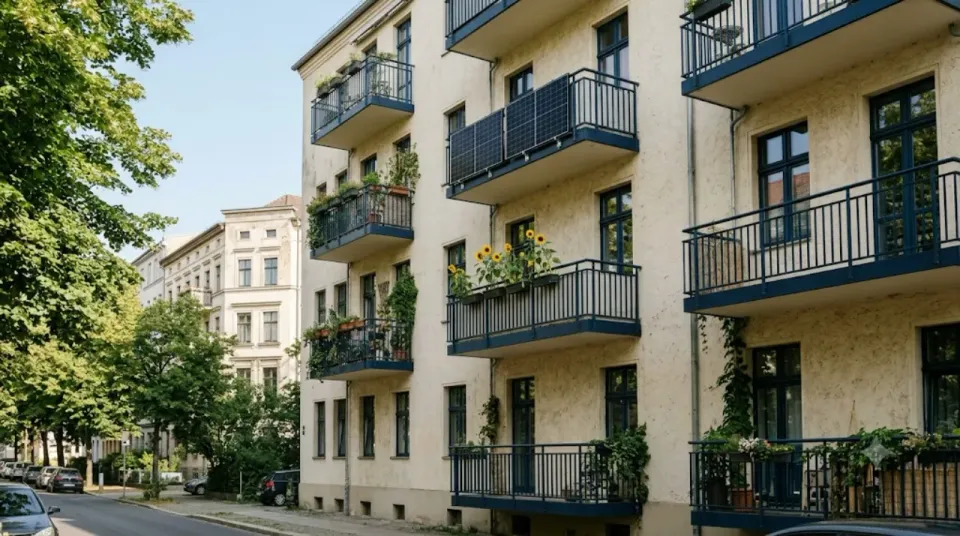
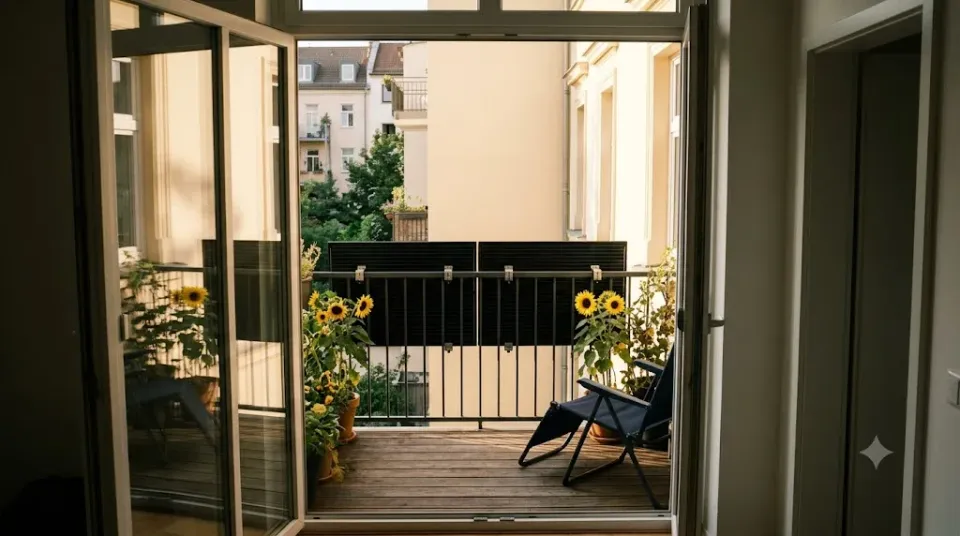
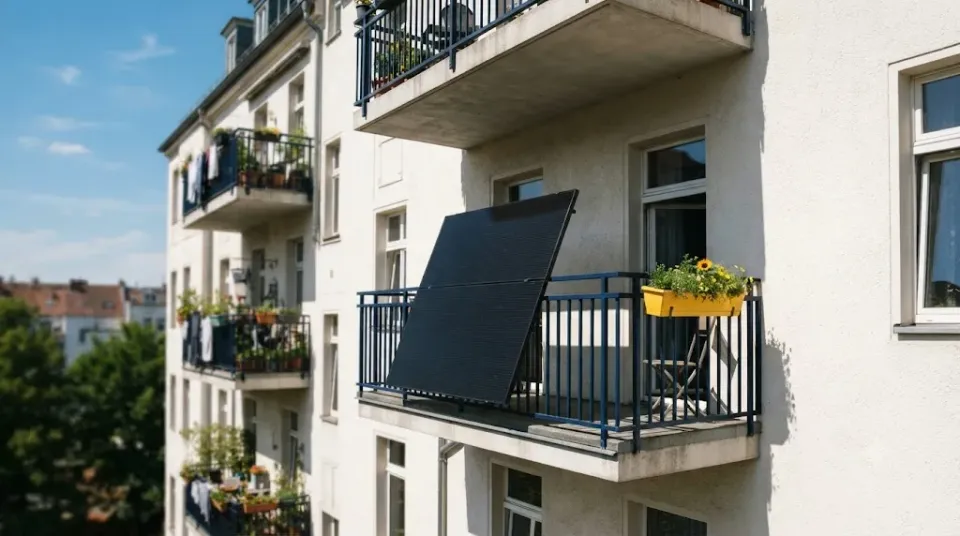
- The position. Inside the railing or at railing height is the easiest sell. Panels sticking out over a street or a neighbour's balcony raise the most questions, and that was the problem in the Cologne case.
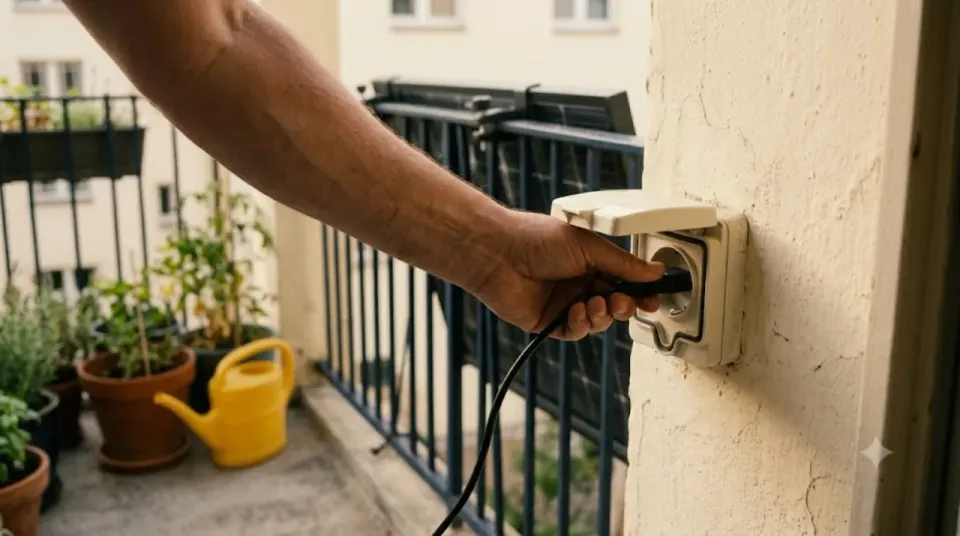
- The connection. An existing outdoor or balcony socket, using the manufacturer's cable. No extension reels, no multi-socket strips.
- The standard. A kit built to the product norm DIN VDE V 0126-95, in force since December 2025.
It also helps to know what the kit will actually do for you, in case the landlord asks why you bother. Put your balcony into Sunslot with its direction, tilt and shade, and you will have an estimated yearly output and savings figure to quote. "About 150 euros a year off my bill" is a better answer than "it's good for the planet".
Solarway Balkonkraftwerk Halterung
A railing mount that fixes panels without drilling into the facade, which is the condition most landlords ask for first. Check the railing type, rated load and that it keeps panels where you promised.
Check price on Amazon Ad - affiliate link. Prices change; check the listing.Step 3: Gather your evidence
A request with attachments gets answered faster than one without. Put together:
- The product data sheet for the kit, showing panel size, weight and the norm it meets.
- The mount data sheet, showing the rated load and which railings it suits.
- A photo of your balcony with the panels sketched in. A phone photo and a few lines drawn in any app is fine.
- Proof of liability insurance (Privathaftpflicht, personal liability insurance), or at least the name of your insurer. See insurance and liability.
Here is the checklist I would tick off before sending anything:
| Item | Why the landlord cares | Done? |
|---|---|---|
| Number of panels, size, total weight | Load on the railing | ☐ |
| Inverter limit 800 W, built to DIN VDE V 0126-95 | Electrical safety | ☐ |
| Mount type, no drilling | Damage to the building | ☐ |
| Position inside or at railing height | Falling-panel risk, appearance | ☐ |
| Outdoor socket and manufacturer cable | Fire risk, wiring | ☐ |
| Liability insurance named | Who pays if something goes wrong | ☐ |
| Promise to remove and restore | End of tenancy | ☐ |
| Registration in the Marktstammdatenregister | Shows you follow the rules | ☐ |
| Photo with planned position, data sheets attached | Makes the decision easy | ☐ |
| Reply deadline about four weeks out | Keeps it moving | ☐ |
Step 4: Send the letter
Send it by email or post to whoever manages your tenancy: the landlord, or the property management company (Hausverwaltung). Keep a copy and note the date. If your landlord is German, send the German version. Many German tenants send it in German anyway, because it lands on the right desk faster.
The letter in English
Dear [landlord's name],
I would like to install a small plug-in solar device (Steckersolargerät) on the balcony of my flat at [address, flat number]. Under § 554 BGB this is a privileged measure, and I am asking for your consent.
The system has [number] solar panels of about [size] each, weighing about [weight] kg in total. The inverter limits the feed-in to 800 W. The kit is built to the product norm DIN VDE V 0126-95 and plugs into an existing outdoor or balcony socket using the manufacturer's cable.
The panels will be fixed to the balcony railing with [type of mount], without drilling into the facade. They will sit [inside the railing / at railing height] and will not stick out over the street or a neighbour's balcony. I will register the system in the Marktstammdatenregister. I have personal liability insurance with [insurer] and have informed them.
When I move out, I will remove the system and restore the balcony to its original state at my own cost.
I have attached the product data sheet, the mount data sheet and a photo showing the planned position. I am happy to discuss any reasonable conditions on the mounting. I would be grateful for your reply by [date, about four weeks from now].
Kind regards,
[your name], [phone / email]
The letter in German
Sehr geehrte/r [Name des Vermieters],
ich möchte auf dem Balkon meiner Wohnung in [Adresse, Wohnungsnummer] ein kleines Steckersolargerät (Balkonkraftwerk) anbringen. Nach § 554 BGB handelt es sich dabei um eine privilegierte bauliche Veränderung. Ich bitte Sie hiermit um Ihre Zustimmung.
Die Anlage besteht aus [Anzahl] Solarmodulen mit je etwa [Maße], Gesamtgewicht etwa [Gewicht] kg. Der Wechselrichter begrenzt die Einspeisung auf 800 W. Das Gerät entspricht der Produktnorm DIN VDE V 0126-95 und wird mit dem Herstellerkabel an eine vorhandene Außen- bzw. Balkonsteckdose angeschlossen.
Die Module werden mit [Art der Halterung] am Balkongeländer befestigt, ohne in die Fassade zu bohren. Sie befinden sich [innerhalb des Geländers / auf Höhe des Geländers] und ragen nicht über die Straße oder einen Nachbarbalkon hinaus. Ich melde die Anlage im Marktstammdatenregister an. Ich habe eine Privathaftpflichtversicherung bei [Versicherer] und habe diese informiert.
Bei meinem Auszug baue ich die Anlage auf eigene Kosten ab und stelle den ursprünglichen Zustand des Balkons wieder her.
Anbei finden Sie das Produktdatenblatt, das Datenblatt der Halterung und ein Foto mit der geplanten Position. Über angemessene Auflagen zur Befestigung spreche ich gern mit Ihnen. Für eine Antwort bis zum [Datum, etwa vier Wochen ab heute] wäre ich Ihnen dankbar.
Mit freundlichen Grüßen
[Ihr Name], [Telefon / E-Mail]
A few notes on the wording. The letter names § 554 BGB once, politely, without threatening anyone. It answers the three worries (falling, damage, who pays) in order. It offers to talk about conditions, which signals you are reasonable. And it sets a date, which keeps the request from sitting in a pile. If you own the flat and are writing to the owners' association instead, replace "§ 554 BGB" with "§ 20 WEG" and address it to the property manager.
Fill in every bracket. A letter with "[weight]" still in it tells the landlord you have not done the homework, which is the opposite of what you want.
Step 5: Wait, and follow up politely
Give a realistic deadline, about four weeks. Property managers in large companies are slow, and that is not a refusal.
- Week 4, no answer: send a short, friendly reminder that refers to your first letter and its date.
- Week 6 or later, still nothing: send a second reminder, by post if the first was email, and keep proof of sending.
- Keep the reminder short. Something like: "On [date] I asked for your consent to a plug-in solar device on my balcony (letter attached). I would be grateful for a reply by [new date, two weeks out]. I am happy to answer any questions about the mounting." In German: "Am [Datum] habe ich Sie um Zustimmung zu einem Steckersolargerät auf meinem Balkon gebeten (Schreiben anbei). Für eine Antwort bis zum [neues Datum] wäre ich dankbar. Fragen zur Befestigung beantworte ich gern."
- Do not mount anything in the meantime. Silence is not consent. Mounting without a yes puts you where the Cologne tenant ended up.
Step 6: Handle conditions or a refusal
Most landlords say yes, often with conditions. Some say no. Here is how to handle each.
If the answer is yes, with conditions
Reasonable conditions are normal and you should accept them. Typical examples: mount inside the railing, use a particular colour of frame, no drilling, remove it when you leave, show proof of insurance.
Conditions that make a small kit impractical are a different matter. A wind-load calculation by an engineer, a structural survey or a mandatory specialist installer for two panels on a railing can cost more than the kit. In the Vonovia case those were exactly the conditions that fell away once the tenant sued. If you get such a list, reply politely, offer a middle ground (a mount with a published load rating, photos of the finished job), and ask which concern each condition is meant to address.
If the answer is no
- Ask for the reason in writing. Often a no is really a worry about mounting, and a different bracket or position solves it.
- Offer a fix for that reason. Panels inside the railing instead of outside. A clamp mount instead of screws. A smaller, lighter kit.
- Get advice. If the landlord still refuses without a clear reason, your local tenants' association (Mieterverein) can advise you. Many offer a short consultation for members.
- Keep court as a last resort. It is rarely worth starting a dispute over a few hundred euros of panels, and it strains the relationship you still live with. But the early cases show tenants can win when the refusal is just a general worry.
Anker SOLIX RS40P Balkonkraftwerk
A complete balcony kit with panels, 800 W inverter and cable, so your letter can cite one data sheet. Check the current version's norm compliance and the weight against your railing.
Check price on Amazon Ad - affiliate link. Prices change; check the listing.Step 7: Mount, register and keep your records
Once you have consent in writing, the rest is simple.
- Mount it exactly as described in your letter. If you promised inside the railing, put it inside the railing. Our setup guide walks through it.
- Register within one month in the Marktstammdatenregister. Our registration guide shows the form.
- Tell your insurer, if you have not already.
- Keep a folder with the consent letter, data sheets, register confirmation and photos of the finished mount. If the property changes hands or a new manager arrives, you can show in a minute that everything was agreed and done properly.
Then make the panels earn their keep. Run the dishwasher and washing machine when the sun is on your balcony. Sunslot shows the hours when your direction and shade give the most power, so you can catch the peak instead of exporting it unpaid.
If you own a flat in an owners' association
The process is similar, but you ask the owners' association (WEG), not a landlord. Under § 20 WEG you also have a claim to consent, and the association decides on the how.
- Put it on the agenda early. Owners' meetings are often once a year. Ask the property manager to add your request well before the invitations go out.
- Send the same details as in the tenant letter: kit, weight, mount, position, norm, insurance.
- Expect rules on appearance. Associations often agree on one mount type or frame colour for the whole building. That is a reasonable condition.
- If you also rent the flat out, your tenant asks you, and you may then need the association's consent in turn.

What weakens a request
- Mounting first, asking later. The most common and most costly mistake. It turns a legal claim into a removal order.
- Vague letters. "I'd like some solar panels" invites a vague no. Numbers, a photo and a data sheet invite a yes.
- Panels outside the railing over a street. The hardest position to defend. Choose inside or at railing height if you can.
- Ignoring the insurance question. Name your insurer in the letter. It removes the biggest worry in one line.
- Treating silence as consent. It is not. Remind, then remind again.
- Arguing before asking why. A no often hides one specific worry. Find it, fix it, ask again.
- Forgetting removal. Promise to take it down and restore the balcony when you leave. Then do it.
Shelly Plug S Gen3
Measures what your kit feeds, useful if a landlord or association asks what it actually does. It measures one socket only.
Check price on Amazon Ad - affiliate link. Prices change; check the listing.An example: Sofia's request in Munich
Here is one example household, clearly hypothetical, to show the steps working. Sofia rents a second-floor flat in Munich from a large property company. Her balcony faces south-west with open metal bars.
- Plan: two 430 Wp panels (860 Wp), 800 W inverter, kit built to the current norm, about 50 kg in total including the mount. Clamp mount inside the railing, no drilling.
- Evidence: both data sheets, a phone photo with two rectangles drawn in, her liability insurer named.
- Week 0: sends the German letter by email to the Hausverwaltung.
- Week 4: no reply. Sends a short reminder.
- Week 6: reply: yes, on condition that the panels stay inside the railing, frames are black, and she removes everything on moving out. She accepts.
- Week 7: mounts, plugs in, registers the same evening.
Her estimate: around 700 kWh a year, of which she uses about 60 percent at home. 420 kWh at 35 cents is about 147 euros a year. Six weeks of patience for a system that pays back over several years, with no dispute and a landlord who now knows exactly what is on the balcony.
Renting questions
Can my landlord charge me extra rent for the balcony system?
A plug-in kit you install and pay for yourself is your property, not an improvement by the landlord. It is not a reason to raise rent. Check your contract and ask your tenants' association if this comes up.
Can my landlord require a professional installer?
A landlord can set reasonable conditions on how the system is fixed. A demand that makes a small kit impractical can be challenged, as the Vonovia case showed. Offering photos of the finished mount and a rated bracket is often a fair middle ground.
What if my rental contract says no changes to the balcony?
A general clause in the contract does not remove the legal claim under § 554 BGB. You still have to ask, and the landlord can still set reasonable conditions or refuse for a good reason.
Do I need consent for a panel that just stands on the balcony floor?
If it feeds into your home wiring, ask anyway. A freestanding panel is less of a structural change, but it is still a power system on rented property, and written consent protects you if anything goes wrong.
What happens when I move out?
Take it down, restore the balcony and update or close your entry in the Marktstammdatenregister. If the next tenant wants to keep it, agree that in writing with them and the landlord.