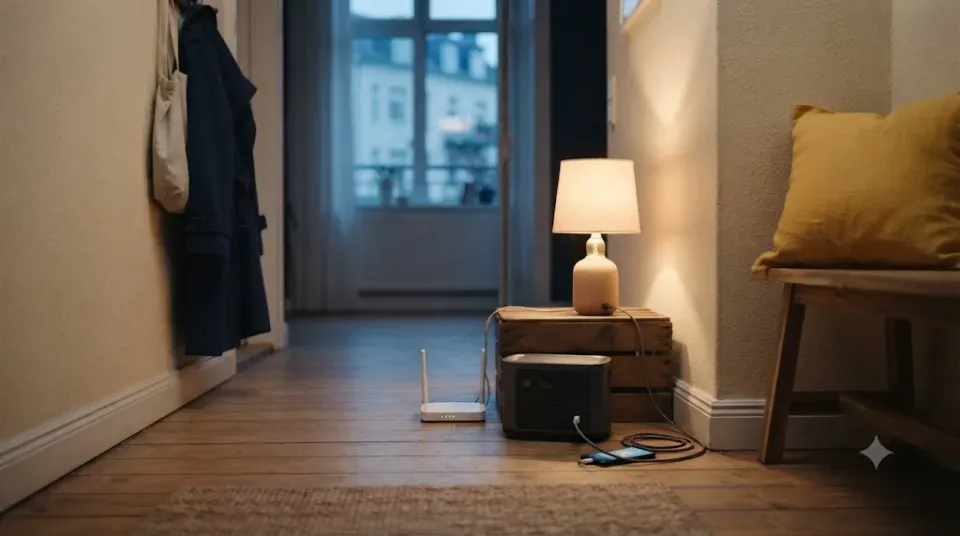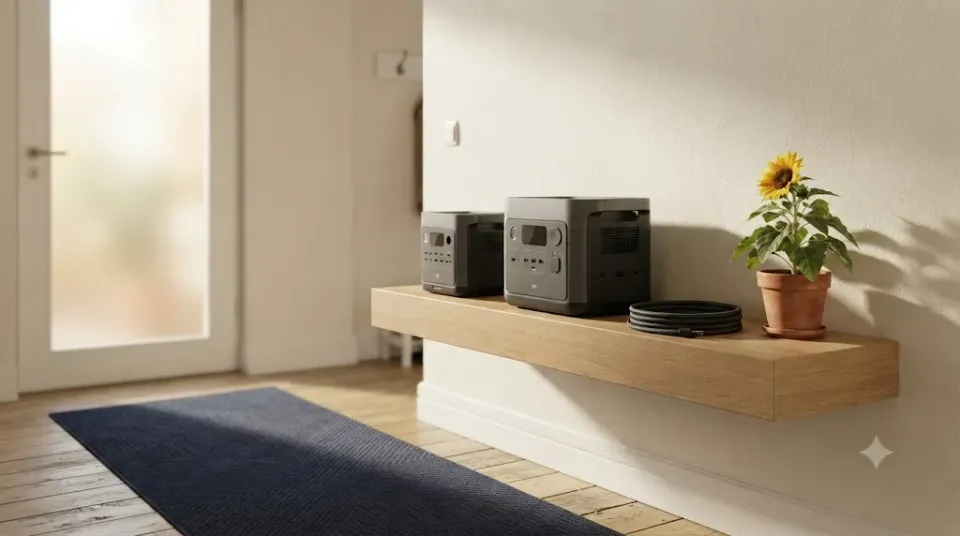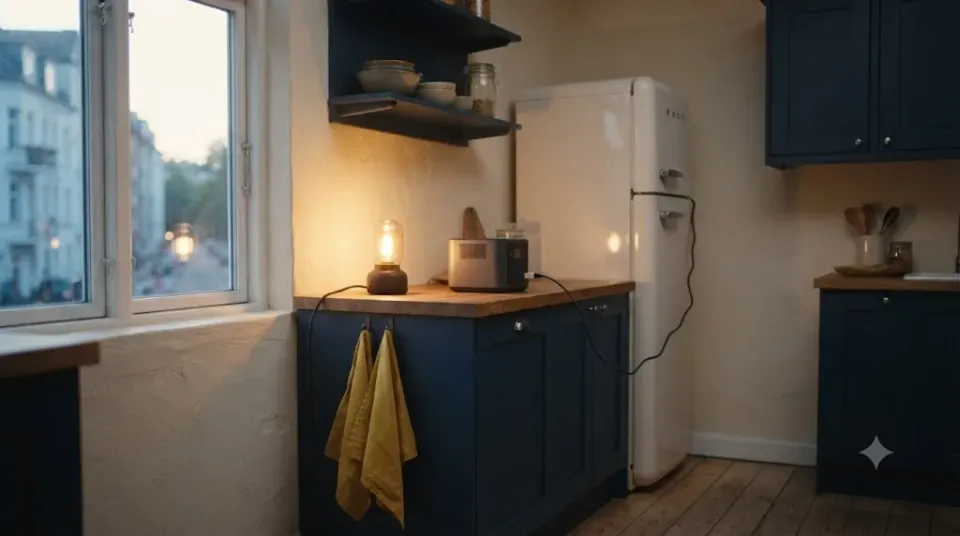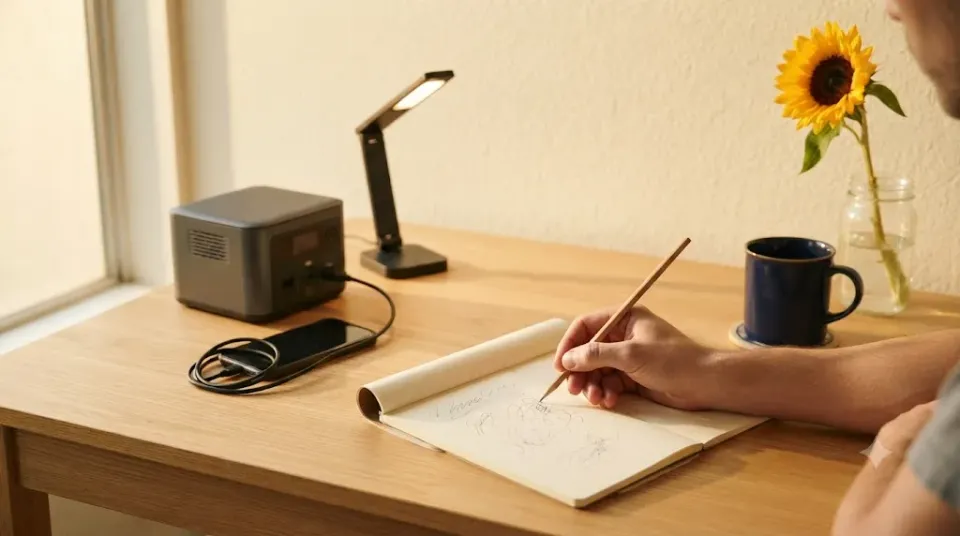
The most common power station mistake costs hundreds of pounds and several kilos. People buy a 2,000 Wh unit "to be safe," then use 300 Wh a weekend and carry the rest around for nothing. The opposite mistake is worse: a small unit that shuts off at 3 a.m. because the fridge's start-up surge was bigger than the inverter. The fix is not a bigger number. It is a short decision path: what you will run, for how long, and how you will refill it. This guide gives you that path, a decision table and what we would pick for each case.
The two numbers that decide everything
Every power station has two ratings that matter. Get these straight and the rest is arithmetic.
- Inverter output in W (watts - the power it can deliver at one moment). This decides what you can run. A 600 W inverter cannot start a 2,000 W kettle, however full the battery.
- Battery capacity in Wh (watt-hours - the energy it stores). This decides how long you can run it. A 50 W device for 4 hours uses 200 Wh.
Watts times hours gives watt-hours. That one line is the whole method. If the units still feel slippery, watts vs watt-hours explains them, and what a power station is covers what is inside the box.
Step 1: which path are you on?
Start with the job. Most people fit one of five paths, and each has a very different answer.
- If you want phones, a laptop and lights through a short power cut, go to path A: small backup.
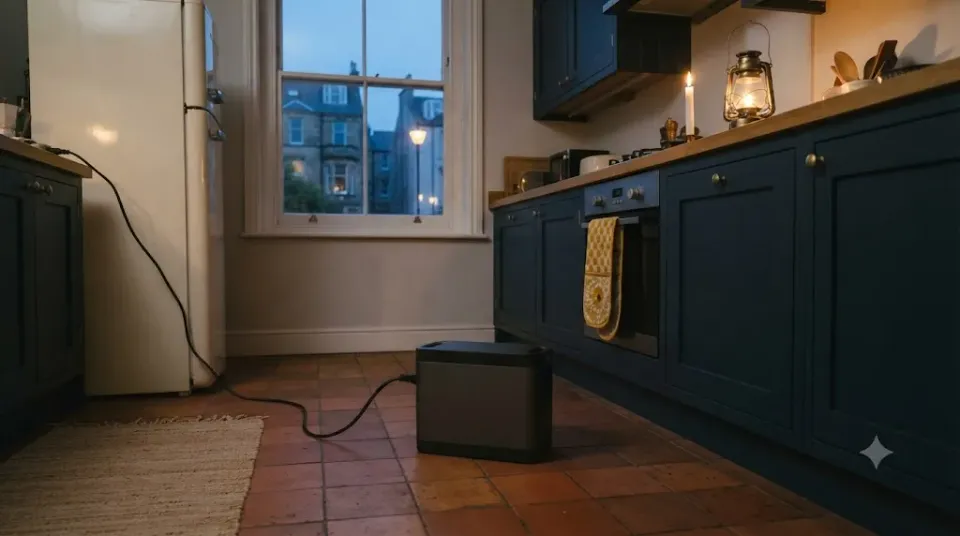
- If you want the fridge and internet running through a day-long cut, go to path B: home essentials.
- If you camp or travel in a van, go to path C: camping and vans.
- If you want to store solar power for the evening, go to path D: solar storage.
- If you rely on a medical device such as a CPAP machine, go to path E: medical backup.
If two paths apply, size for the bigger one and check the weight still works for the other.
Step 2: list what you will run
Whatever the path, you need a list. Find the power of each device on its label, the charger or in the manual. For devices that switch on and off - fridges and cool boxes - the label figure misleads. Use the yearly energy figure (kWh per year on the energy label) and divide by 365 for the daily use.
Typical figures, to check against your own devices:
| Device | Typical power | Typical use | Energy |
|---|---|---|---|
| Wi-Fi router | 10 W | 24 h | 240 Wh |
| Phone charge | 15 W | 1 per day | about 15 Wh |
| Laptop | 50 W | 4 h | 200 Wh |
| LED lamps (3) | 24 W | 5 h | 120 Wh |
| Modern fridge (A to C class) | about 100 W while running | 24 h | 300 to 500 Wh |
| 12 V compressor cool box | 45 W while running | 24 h | 300 to 500 Wh |
| CPAP machine (no humidifier) | 30 to 60 W | 8 h | 240 to 480 Wh |
| TV (LED, 43 inch) | 60 to 80 W | 3 h | 180 to 240 Wh |
| Electric kettle | 2,000 W | 5 min | about 170 Wh |
Best of all, measure. A plug-in energy meter between the wall and a device shows its real watts and, left for 24 hours, its real daily Wh. Ten minutes with one beats any table, especially for an older fridge.
An example of why it matters: say the energy label on a 15-year-old fridge-freezer says around 300 kWh a year. If a plug-in meter then shows 1.1 kWh over 24 hours on a warm day, that is 400 kWh a year - a third more than the label. Sizing from the label alone would have left the battery short by evening.
KETOTEK plug-in power meter (UK 13A)
A plug-in meter that shows what your fridge, router or CPAP really draws over a day, so you size from facts. UK 3-pin, rated to 13 A; measures one device at a time, indoors only.
Check price on Amazon Ad - affiliate link. Prices change; check the listing.Step 3: check the peak and the surge
Add up everything that could run at the same time. Your inverter must handle that total with room to spare.
Then look at motors. Fridges, freezers, pumps and power tools draw a short surge (a start-up burst lasting a fraction of a second) of two to three times their running power. Inverters list a surge or peak rating for that. A fridge that runs at 100 W may need 300 W for a moment when the compressor kicks in. If the inverter cannot supply it, the unit trips - often in the middle of the night, when nobody is watching.
Heating devices are the other trap. Kettles, hair dryers, toasters, fan heaters and coffee machines draw 1,000 to 2,500 W. If you want one, the inverter must be rated above it. If you do not, cross them off the list - that alone can halve the inverter size you need.
A simple peak check:
- Add the running watts of everything on at once.
- Add the extra surge of the single biggest motor (its running watts times two).
- Pick an inverter whose continuous rating beats step 1 and whose surge rating beats step 2.

Step 4: add up the energy, then divide by 0.8
Add the energy column for as long as you need to last without recharging. Then allow for two losses:
- Conversion losses. Turning battery power into 230 V costs about 10 to 15 percent. USB-C and 12 V outputs lose less.
- Usable capacity. Not every Wh on the label comes out. Makers keep a reserve, batteries age, and cold reduces what you get.
The simple rule: divide your total by 0.8. If you will use the unit in winter, in a cold van or for years of daily cycling, divide by 0.7 instead.
The same rule works backwards when you already own a unit and want to know how long it lasts. Runtime in hours = label Wh x 0.8 / device watts. A 768 Wh unit running a 40 W CPAP: 768 x 0.8 / 40 = about 15 hours, or nearly two nights. The same unit running a 10 W router: about 61 hours. Running both at once: 768 x 0.8 / 50 = about 12 hours. Write that number on a sticky note on the unit - in a real power cut, nobody wants to do maths by torchlight.
How long should you plan for?
Most power cuts in Great Britain are short faults fixed within hours. Winter storms are the exception: they bring down overhead lines, and rural homes can wait much longer. The government's Prepare power cuts advice covers the basics around any battery, and calling 105 puts you through to your local network operator. If someone at home depends on powered medical equipment, ask your network operator about the free Priority Services Register. A practical compromise for a flat: size for 24 hours of essentials, and plan how you would stretch to 48 by cutting the TV, keeping the fridge door shut and charging phones only once. That keeps the unit liftable while covering the cuts that actually happen.
The five paths, worked through
Path A: small backup for a short cut
Example: a student in a shared flat in Leeds. Laptop 200 Wh, two phone charges 30 Wh, one LED lamp for 5 hours 40 Wh. Total 270 Wh. Divided by 0.8 = about 340 Wh. Peak: laptop plus lamp, under 100 W.
Then: a unit of around 300 to 500 Wh with a 300 to 600 W inverter. It weighs a few kilos and fits on a shelf. If the list is only phones, a large USB-C power bank may do.
Path B: home essentials through a day
Example: a family of four in a semi in Bristol. Router 240 Wh, phones 60 Wh, lamps 120 Wh, fridge 400 Wh, TV for an evening 200 Wh. Total 1,020 Wh. Divided by 0.8 = about 1,275 Wh. Peak: fridge surge (about 300 W) plus TV, router and lamps (about 120 W) = around 450 W.
Then: about 1,000 to 1,500 Wh, with an inverter of 1,000 W or more for headroom. For a 12-hour cut instead of 24, a 700 to 1,000 Wh unit is enough. Our 48-hour power cut plan shows how to stretch it further.
Path C: camping and vans
Example: a weekend campervan trip from Manchester. Cool box 400 Wh a day, lights 60 Wh, phones and a camera 50 Wh, laptop 100 Wh. About 610 Wh a day, or 1,220 Wh for two days. Divided by 0.8 = about 1,525 Wh without recharging.
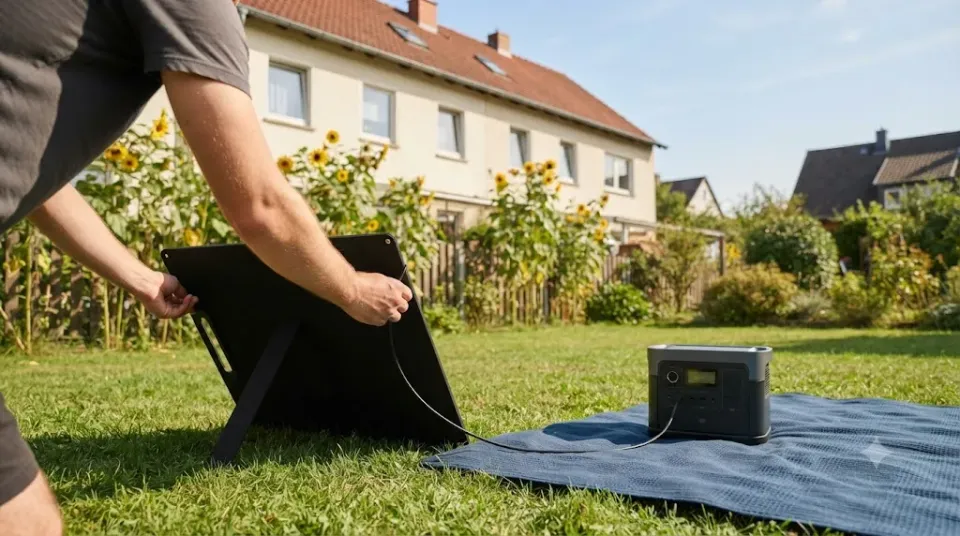
Then: without solar, around 1,500 Wh. With a 200 W folding panel adding perhaps 600 to 800 Wh on a sunny summer day, a 1,000 Wh unit is enough. Weight matters here: if you carry it to a tent pitch, every kilo counts. See camping and van power.
Path D: storing solar for the evening
A GB rule first: the plug-in solar rules that apply since 27 August 2026 do not allow a plug-in solar kit to be used with battery storage. So in Great Britain this path means a power station charged from its own portable solar panel, not one that stores the output of a plug-in kit. (In Germany, battery add-ons for balcony systems are sold; see the Germany guides.)
Here the size depends on your solar surplus, not your appliances. A panel might leave 1 to 2 kWh to store on a sunny summer day - and much less in spring and autumn, often almost nothing in winter.
Then: match the battery to a typical sunny day's surplus, not the best day. A battery much bigger than your surplus never fills. Sunslot shows the hour-by-hour solar output for your location, direction, tilt and shade. If Sunslot shows 1.2 kWh of surplus on a typical June day and 0.4 kWh in October, a 1,000 Wh unit is about right; a 2,000 Wh one will sit half empty most of the year.
Remember that a portable power station only powers what you plug into it - it does not feed your home wiring. See pairing panels with a power station.
Path E: medical backup
Example: a household in Glasgow where one person uses a CPAP machine at 40 W for 8 hours a night. That is 320 Wh per night, divided by 0.8 = 400 Wh. For three nights without power: 1,200 Wh.
Then: at least 1,000 to 1,500 Wh for multi-night cover, plus a way to recharge (a car charger or a panel). A humidifier can double or triple the energy use - check with the device maker and switch it off in an emergency if they allow it. Many CPAP machines run more efficiently from a 12 V or DC adapter than from 230 V. Ask your supplier before you rely on any setup, and test it for a full night while the mains is still on.
Anker SOLIX C300X
288 Wh LiFePO4 with a 300 W inverter (600 W surge) and 140 W USB-C ports: laptops, phones and lights through a short cut. Too small to run a fridge for long.
Check price on Amazon Ad - affiliate link. Prices change; check the listing.The decision table
If you skipped straight here, this is the whole guide on one screen. Find your row and check both columns.
| If you need to run... | For... | Battery | Inverter | Typical weight |
|---|---|---|---|---|
| Phones, laptop, one lamp | One evening to one day | 300 to 500 Wh | 300 to 600 W | 3 to 6 kg |
| Router, lights, phones, laptop | 12 to 24 hours | 500 to 1,000 Wh | 600 W+ | 6 to 12 kg |
| Fridge plus the above | 12 hours | 700 to 1,000 Wh | 800 to 1,000 W+ | 10 to 13 kg |
| Fridge plus the above | 24 hours | 1,000 to 1,500 Wh | 1,000 W+ | 11 to 16 kg |
| Van: cool box, lights, laptop | Weekend with a 200 W panel | about 1,000 Wh | 600 W+ | 10 to 13 kg |
| Van: cool box, lights, laptop | Weekend, no solar | about 1,500 Wh | 600 W+ | 15 to 20 kg |
| CPAP (no humidifier) | Three nights | 1,000 to 1,500 Wh | 300 W+ | 10 to 16 kg |
| Kettle, hair dryer or power tools | Short bursts | 1,000 Wh+ | 2,000 W+ (check surge) | 12 kg+ |
| Balcony solar surplus | Daily cycling | Your typical sunny-day surplus, often 500 to 1,500 Wh | As needed for evening loads | Depends |
Weights are typical ranges for current LiFePO4 units and vary by model. Always check the spec sheet.
Step 5: check recharging, weight and chemistry
Recharging
A big battery is only useful if you can refill it in the time you have. Check three numbers: wall charging time, maximum solar input in watts, and car charging rate (a 12 V car socket typically delivers only around 100 to 120 W).
A worked example: a 2,000 Wh unit with 200 W of solar input needs about 10 hours of full sun, more like 13 to 14 real hours once you allow for panels producing below their rating. That is more than a British winter day gives. A 1,000 Wh unit with 400 W of solar input refills in an afternoon. For off-grid use, the solar input often matters more than the battery size.
Weight
Lift it before you buy, or at least read the figure. Units around 1,000 Wh often weigh 10 to 15 kg, and 2,000 Wh units commonly 20 kg or more. If you will carry it down four flights of stairs to the car, that matters as much as capacity.
Chemistry
Most current units use LiFePO4 (lithium iron phosphate): heavier, but much longer-lived and more heat-tolerant. NMC units are lighter but wear out sooner. For daily solar cycling or home backup, LiFePO4 is the sensible default. Read LiFePO4 vs NMC before you compare models.
Anker SOLIX C1000 Gen 2
1,024 Wh LiFePO4 with a 2,000 W inverter (3,000 W peak) and up to 600 W solar input per the listing: enough headroom for a fridge's surge. Over 10 kg, so not for carrying far.
Check price on Amazon Ad - affiliate link. Prices change; check the listing.Common sizing mistakes
- Using the fridge's label watts times 24. A 100 W fridge does not use 2,400 Wh a day. It cycles. Use the energy label's yearly figure divided by 365.
- Forgetting the surge. The inverter handles the fridge's running 100 W but trips on its 300 W start. Check the surge rating.
- Counting every label Wh as usable. Plan with 80 percent, or 70 percent in the cold.
- Buying for the rare case. If you need a kettle once a year, use a camping stove that day rather than doubling the inverter size.
- Oversizing for solar. A battery bigger than your surplus never fills, and you paid for capacity you do not use.
- Ignoring the refill. A big battery with a small solar input is a one-shot device off-grid.
- Not testing. Run your real setup for a full evening while the mains is still on. You learn more in one test than in an hour of spec sheets.
What we would pick
Based on the sums above and the makers' datasheets (we have not tested these units), path by path:
- Path A (small backup): a compact LiFePO4 unit of around 300 Wh with good USB-C ports. It covers laptops and phones for a day and lives on a shelf.
- Path B (home essentials) and path C (van weekends): a 1 kWh class LiFePO4 unit with an inverter of at least 1,000 W and a solar input of 400 W or more. It is the sweet spot for most households: runs a fridge, refills in an afternoon of sun, and you can still lift it.
- Path D (solar storage): size to the typical surplus you see in Sunslot, usually 1 kWh class, with a solar input that matches your panel.
- Path E (medical): 1 to 1.5 kWh class, plus a car charging cable and, if possible, a panel. Test a full night first and keep it charged.
And before any of it: buy a plug-in energy meter and measure your real devices for a day. It is the cheapest part of the whole exercise and the one that makes every other number honest.
Jackery Explorer 1000 v2
1,070 Wh LiFePO4 with a 1,500 W inverter (3,000 W surge). Compare inverter size, solar input and weight with the Anker before deciding.
Check price on Amazon Ad - affiliate link. Prices change; check the listing.Sizing questions
What size power station do I need for a fridge?
A modern fridge uses roughly 300 to 500 Wh a day. For 24 hours, plan around 500 to 650 Wh for the fridge alone after losses, and an inverter that can handle its start-up surge - usually 600 W or more gives a comfortable margin.
Is 1,000 Wh enough for a power cut?
For essentials, usually yes. It keeps a router, lights, phones and a modern fridge going for around 12 to 24 hours, depending on the fridge and how much else you run. Heating and cooking are not realistic on 1,000 Wh.
How do I find my device's real power use?
Use a plug-in energy meter between the wall and the device. It shows the watts right now and, if you leave it for a day, the total Wh. For fridges, the yearly kWh on the energy label divided by 365 is a good estimate.
Why does my power station shut off when I start a device?
Usually the device's start-up surge is higher than the inverter's surge rating, or its running power is higher than the continuous rating. Motors, compressors and heating devices are the usual causes.
Can I add capacity later?
Some models accept extra battery packs that plug into the main unit. If you think your needs will grow, check for expansion support before you buy, because you cannot add it later to a unit that does not offer it.