

This is general information, not legal advice. Rules change, so check the current wording before you rely on it.
Short version: your landlord can no longer say no just because they do not like it, but you still have to ask, and how you ask decides most outcomes. Longer version is more useful, so here it is.
Since 17 October 2024, plug-in solar has been a privileged measure (privilegierte Maßnahme, a change to the flat that the law says a landlord should normally allow) under § 554 BGB, the section of the Civil Code about changes a tenant may ask for. Before that date, a landlord could refuse almost freely. Now the default has flipped: the tenant can demand consent, and the landlord can only refuse if allowing it would be unreasonable for them after weighing both sides.
Three things have not changed, and they are where most people trip up.
- You still need consent before you mount anything. The right is a right to permission, not a right to install and tell them later.
- The landlord can set conditions on how and where it goes: mounting, cable route, position, appearance, insurance, removal when you move out.
- A real reason can still win. Unsafe mounting, panels hanging over the street, a listed building, damaged electrics or serious structural concerns are the typical ones.
What usually does not count any more is "I do not like the look". The Hamburg regional court said as much in December 2024: a purely aesthetic objection is not enough. In January 2026, Vonovia, Germany's largest landlord, dropped demands for wind-load calculations and structural reports in a case in Aachen and agreed to a tenant's system in court.
So the law is on your side. But here is the thing most people miss: landlords and property managers rarely refuse out of malice. They refuse because a vague request feels like risk. "Can I put solar on my balcony?" sounds like heavy glass hanging over a pavement and a fire in the stairwell. A specific request with a photo, a weight and a mount type sounds like a tidy little device someone has thought through.
Almost every refusal comes from three worries: something falling off, damage to the building, and who pays if it goes wrong. Answer all three in one short email, attach the datasheet and one photo, and you have done 90 percent of the work. The rest of this page is the follow-up questions people ask next, with the email you can copy.
What exactly do I put in the request?
Think of it as answering the questions before they are asked. A property manager reading your email at 16:45 on a Friday wants to tick a box, not research solar. Give them the facts on one screen.
| Their worry | What you write | What you attach |
|---|---|---|
| Falling off in a storm | Mount type, panels clamped on the inside of the railing, nothing projecting over the street or the balcony below | Mount datasheet, a photo with the panels drawn in |
| Damage to the building | No drilling into the facade, clamps only, full removal and restoration when you move out | Product photo of the clamps |
| Liability | Your private liability insurance (Privathaftpflicht) knows about it | Optional: the insurer's short confirmation |
| Electrical safety | Complete kit to the current product norm, maker's cable, straight into a fixed wall socket, inverter limited to 800 W | Kit datasheet |
Two numbers people forget and landlords ask for: total weight and panel size. A typical 430 Wp panel is around 1.7 m x 1.1 m and roughly 20 to 22 kg. Two of them plus a mount is often 45 kg or more. Write it down. A landlord who sees "45 kg, clamped inside the railing" relaxes. One who sees nothing imagines worse.
Can I just copy an email?
Yes. Fill the brackets, keep it short, and send it in German if your landlord is German - a plain translation of the same points works well. Many property managers have a form; if they do, use it and attach the same facts.
Dear [name],
I would like to install a small plug-in solar device (Steckersolargerät) on the balcony of my flat at [address, floor, flat number]. Under § 554 BGB this is a privileged measure, and I am asking for your consent.
The kit has [two] panels of about [1.7 x 1.1] m, about [45] kg in total including the mount. They will be clamped to the inside of the railing with [mount name], with no drilling into the facade, and nothing will project over the street or the balconies below. The inverter limits output to 800 W. It plugs into the existing balcony socket with the manufacturer's cable, with no extension leads.
The kit meets the current product norm for plug-in solar devices. I will register it in the Marktstammdatenregister and have informed my liability insurer. When I move out I will remove it and restore the balcony.
A photo showing the planned position and the datasheet are attached. I am happy to agree reasonable conditions on placement.
Kind regards, [name, phone]
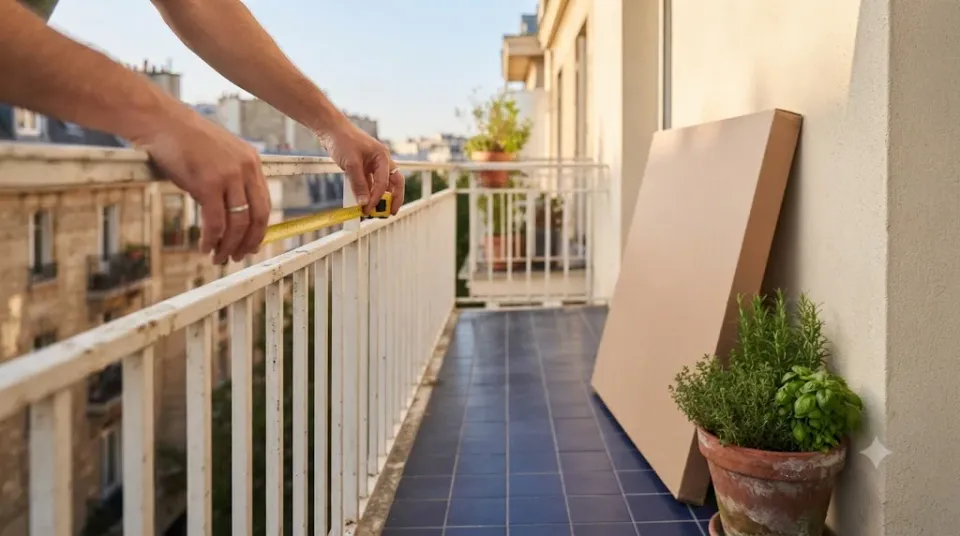
Five minutes, honestly. One minute to measure the railing, one to take and mark up the photo, two to fill the email, one to attach and send. Our full guide on getting your landlord's yes has a longer letter if you want more detail in it.
Hoymiles HMS-800W-2T
A widely used 800 W microinverter with clear documentation you can attach to your request. It is a component; a complete kit with mount and cable is easier for most renters.
Check price on Amazon Ad - affiliate link. Prices change; check the listing.What conditions can the landlord set?
There is no official list, which is why this question comes up so often. A property managers' association summary from January 2026 treats these as reasonable, and they match what most landlords ask for anyway:
- Proof of private liability insurance.
- Components that meet the current standard, so a complete, certified kit.
- Professional or proper installation, for example a specific mount, or panels inside the railing only.
- Removal when you move out, with the balcony restored.
Registration in the Marktstammdatenregister is a legal duty anyway, so a landlord asking you to do it is asking for nothing extra.
Other common requests that are usually fine: black frames and black backsheets so it blends in, a position that does not shade the balcony below, an electrician's check of an old balcony socket. Accepting these costs you little and makes the yes quick.
Where it gets grey is anything that quietly makes the project impossible. A wind-load report from a structural engineer for a clamp-on kit, or a large extra deposit, are the classic ones. Vonovia dropped exactly those demands in the Aachen case. The deposit question has not been settled by a court yet. If you get one of these, ask politely and in writing what the specific reason is.
What if the answer is still no?
Do not mount it anyway. A Cologne local court in December 2024 ordered a tenant to remove two panels mounted outside the railing without consent, citing storm risk. That case is under appeal, but it shows the cost of skipping the request.
Instead, work down this list:
- Ask for the reason in writing. A refusal without a reason is weak. A written reason tells you what to fix.
- Fix the actual worry. If it is the outside of the railing, offer inside. If it is weight, offer one panel or lighter glass-foil panels. If it is the socket, offer an electrician's check.
- Mention § 554 BGB politely and offer to agree placement. Many refusals are just an old habit from before October 2024.
- Talk to a tenants' association (Mieterverein). Membership is usually modest and they deal with this often.
And while it is being sorted out, there are options that need no permission at all, covered further down.
Your landlord says yes, but only if a structural engineer checks the railing first, at your cost. What would you do?
A structural report for a small clamp-on kit is the kind of condition that can quietly block a privileged measure, and Vonovia dropped exactly that demand in the Aachen case. Asking for the specific reason keeps the conversation friendly and on the record. Mounting without agreement puts you in the wrong, whatever the law says about consent.
Do flat owners have to ask too?
Yes, but the question is different. If you own your flat in a building with an owners' association (WEG), § 20 WEG gives you a similar privileged right since October 2024. The association decides how it is done, not whether.
In practice: put it on the agenda of the owners' meeting or ask the property manager to arrange a resolution. Do not install first. In July 2025 the Federal Court of Justice (BGH) confirmed that a clearly visible system on the outside is a structural change even without drilling, and without a resolution the community can demand removal. That case involved nine large panels, far more than a normal kit, but the principle applies.
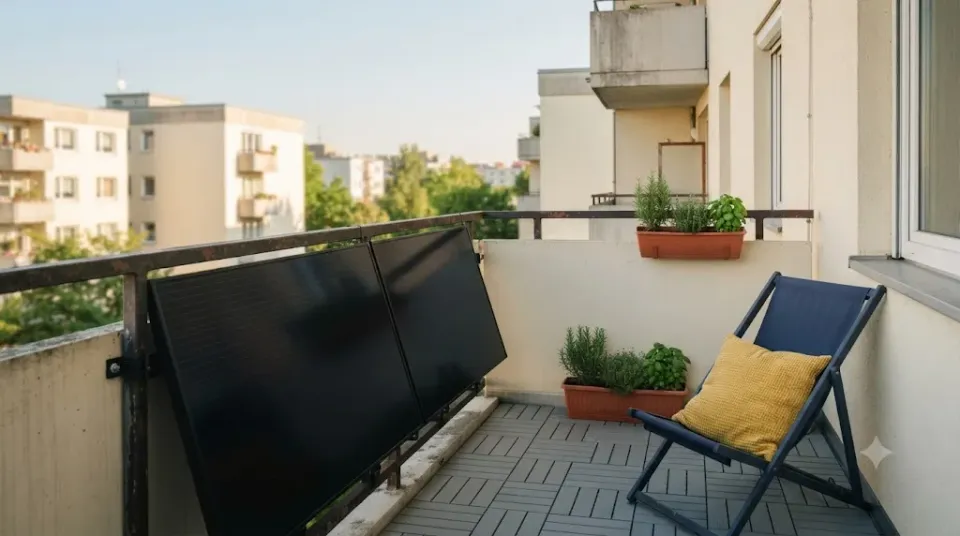
The same three answers work in an owners' meeting: mount, no damage, insurance. Bring the photo.
Is it actually worth the email for my balcony?
Good question to ask before you write anything. A request for a kit that will make 300 kWh a year is the same effort as one that will make 800 kWh. Here is a rough guide for a 2 x 430 Wp kit, with panels hanging vertically on a railing, about half the power used at home, and electricity at about 37 ct/kWh:
| Balcony | Rough yearly output | Rough yearly saving |
|---|---|---|
| South, no shade | about 550 to 650 kWh | about 100 to 120 euros |
| East or west, no shade | about 400 to 480 kWh | about 75 to 90 euros |
| South with a balcony above shading the top half | about 300 to 400 kWh | about 55 to 75 euros |
| North | well under 300 kWh | often not worth it |
With a kit around 400 euros, the first three rows usually pay back in roughly 4 to 7 years, and faster if you tilt the panels or use more of the power at home. Your own numbers can be quite different, because floor, neighbouring buildings and trees matter a lot. Put your balcony into Sunslot with its direction, floor and shade and you will see the yearly output and payback for your spot. A solid number also makes the email more confident.
What can I do with no permission at all?
Two routes work without touching the building, and some people start here while the request is pending.
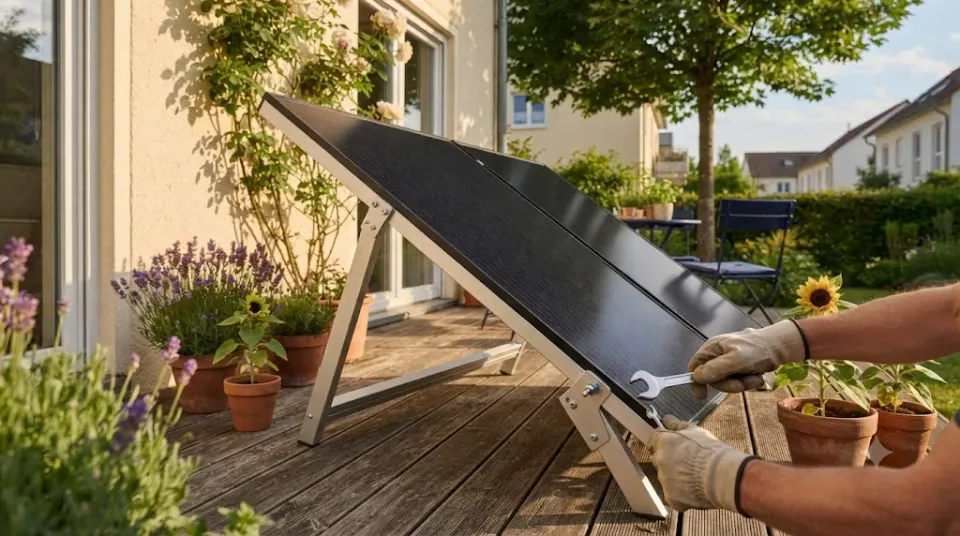
- A panel standing on the balcony floor, behind the railing, on a stand. Nothing is attached to the building, nothing projects. It still feeds your socket, so the electrical rules and registration still apply, and some landlords argue any plug-in solar needs consent. If in doubt, mention it in your request as the fallback option.
- A portable power station with a folding panel. The panel charges the power station; the power station runs your laptop, lights or router. It never connects to your home wiring, so it is outside the plug-in solar rules entirely. It saves less money, but it doubles as outage backup.
The guide to other spots that work covers floor stands, small gardens and walls.
EcoFlow 220W Bifacial Portable Solar Panel
A folding panel that stands on the balcony floor and charges a power station, with nothing fixed to the building. It charges the power station only and does not feed your sockets.
Check price on Amazon Ad - affiliate link. Prices change; check the listing.What do I do after the yes?
- Mount it exactly as described in your request. If you change the position or add a panel later, ask again.
- Register it in the Marktstammdatenregister within a month. It takes about ten minutes; see registration. You no longer need to notify the grid operator separately.
- Tell your liability insurer if you have not already. See insurance.
- Keep the paperwork: your email, their reply, the photo, the datasheet. If the building is sold or the manager changes, it proves the system was agreed.
- Check your meter. An old meter may run backwards for a while. The grid operator must replace it, usually within weeks to a few months.
Then put a smart plug between the kit and the socket for the first month so you can see what it really makes.
Shelly Plug S Gen3
Shows what your kit really delivers in the first weeks, handy if the landlord or insurer asks. Rated for normal household loads and needs Wi-Fi.
Check price on Amazon Ad - affiliate link. Prices change; check the listing.What people get wrong
- Buying before asking. If the landlord's conditions rule out your mount or panel size, you are stuck with a box you cannot use. Ask first, buy second.
- Mounting first and asking later. It puts you in the wrong and the landlord on the defensive, and courts have ordered removals.
- Sending a one-line request. Vague requests get cautious answers. Weight, size, mount and a photo get yeses.
- Panels tilted outward over the street. They look risky and often are. If you want tilt, ask about a bracket that leans inward. See mounting on a railing.
- Extension leads and multi-socket strips. Not allowed under the product norm. Plug straight into a fixed socket.
- Forgetting the neighbour below. A panel that shades or overhangs their balcony creates the complaint that turns into a condition.
- Arguing the law in the first email. Cite § 554 BGB once, calmly. Lead with the facts that make yes easy.
Your next step
- Check the number first. Run your balcony in Sunslot so you know the request is worth sending.
- Measure the railing and mark up one photo, then copy the email above. Today, not next weekend.
- Read the two guides that back it up: getting your landlord's yes for the full letter and mounting on a railing safely for the mount details your landlord will ask about.
